Robotic Surgery
What is Robotic Surgery?
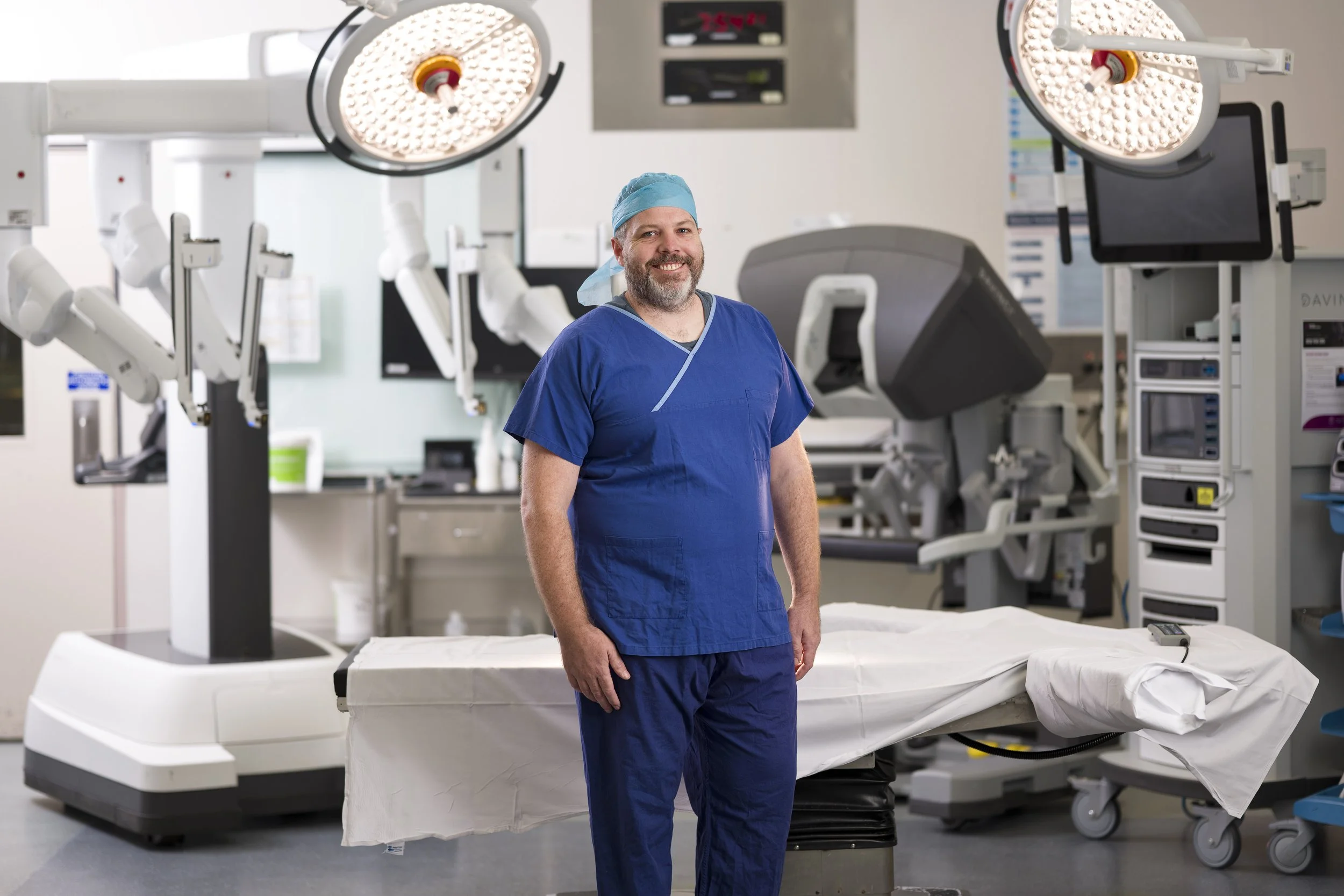
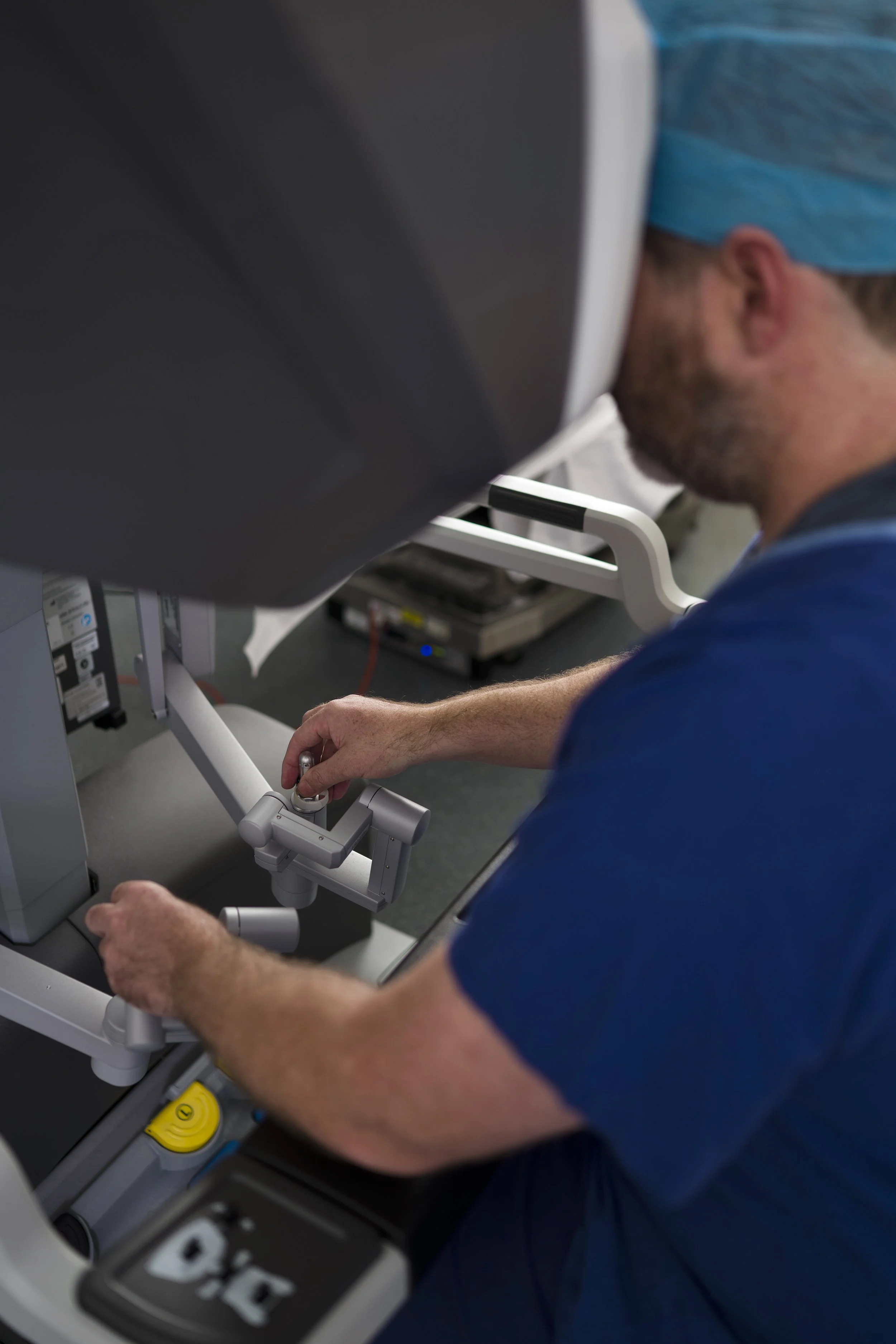
There are two types of minimally invasive surgery: laparoscopic surgery and robotic surgery. Robotic surgery is the most recent development and uses keyhole incisions, robotic arms and an operating console to complete the operation. In laparoscopic surgery the surgeon directly holds the instruments. In robotic surgery the robot arms hold the instruments while the surgeon controls those arms from the console. The robot cannot make independent decisions — it only follows the surgeon’s movements, and the surgeon remains in total control at all times. Robotic systems give the surgeon enhanced 3D magnified vision, a greater range of motion and the ability to perform very small, precise movements; the instruments can access tight spaces and the software helps filter out hand tremor.
What are the benefits of Robotic Surgery?
Robotic surgery often enables a faster recovery and fewer disruptions to daily life. Typical benefits include:
Less pain and discomfort
Quicker recovery and earlier return to usual activities/work
Shorter hospital stay
Minimal scarring
Lower chances of complications
Reduced blood loss
Lower risk of infection
When we use robotic surgery Robotic techniques are routinely used for urological cancers — including prostate, kidney and bladder cancer — and are increasingly applied to benign conditions and complex urinary tract reconstruction. Procedures offered include robotic prostatectomy, nephrectomy, pyeloplasty, ureteric reimplantation, psoas hitch, Boari flap and other reconstructive operations.
Dr Samuel Davies is fellowship trained in minimally invasive and robotic urological surgery. He completed a robotic fellowship at Guy’s and St Thomas’ Hospitals in London under Professor Prokar Dasgupta and Professor Ben Challacombe, bringing advanced training and experience to patient care.